
Why RFID Reads Need Business Context to Improve Supply Chain Visibility
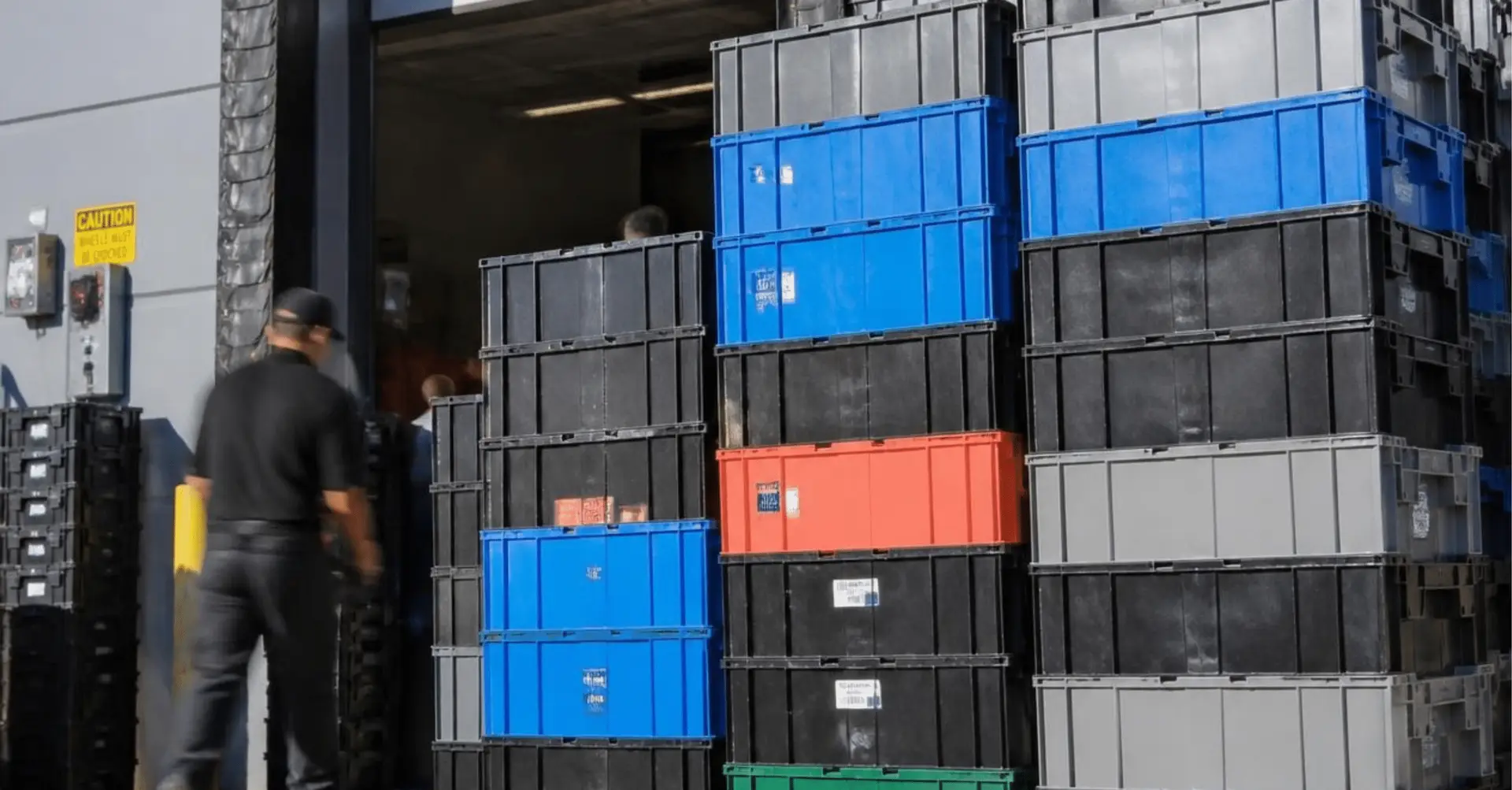
A manufacturer’s ERP may show that a shipment left the plant. But can the operations team confirm which reusable containers went with it, when they reached the next facility, or how long they remained there?
That gap between a recorded transaction and a physical movement is where supply chain visibility often breaks down (as we covered in August). The ERP knows what someone reported. For a returnable container, an operations team needs answers to four questions: where it was last seen, who has it now, how long it has been there, and whether it moved as planned.
RFID supply chain tracking answers the first question on its own. The other three depend on what the business attaches to each read.
What a read records
RFID uses a tag attached to an item or asset and a reader that captures the tag’s identity. Unlike a barcode, an RFID tag does not need to be in a reader’s direct line of sight, so a fixed reader at a dock door can record every tagged container that passes without anyone scanning it.
Each read captures a tag identifier, a reader location and a time. That tells a team where a container was last seen. It says nothing about which shipment the container left on, which partner should have it, or when it is due back. Readers also see a container only when it passes one. Once it leaves the dock door, RFID has nothing more to report until the container passes another reader, which may not happen until it comes back.
What context adds
Follow one container. On Monday, a reader at the plant’s dock door records it leaving. On its own, that read says where the container was on Monday. Linked to the shipment it left on, the read shows which partner has it, and the delivery confirmation shows when it arrived. Checked against a ten-day return window, it shows something else: if no read comes in from the plant’s return gate ten days after delivery, the container is overdue, and the team knows who to call.
Without that context, teams fill the gap with calls, emails, spreadsheets and searches of partner yards, and a missing container can surface months later as a replacement purchase. Between 15 and 30% of returnable assets are lost, stolen, damaged or misplaced each year, and US companies spend $1.5 billion a year replacing stolen or missing reusable shipping containers.
Start with the question you can’t answer
To find the gap, pick ten returnable containers and try to answer the four questions for each one. Note which answers come from a system and which come from a phone call. The phone calls show where an RFID program should start. Our next post covers how to evaluate an RFID tracking program.
ACSIS, part of Antares Vision Group, helps manufacturers connect physical operations with the systems that run them. Its RFID tracking capabilities capture asset and product movements, add business context, and share that information across the supply chain. To explore one practical application, read more about returnable asset management.
If the ten-container test turns up more phone calls than system answers, contact ACSIS to talk through which read points and business data would close the gap.