
Cylinder Tracking Software: 5 Things to Evaluate
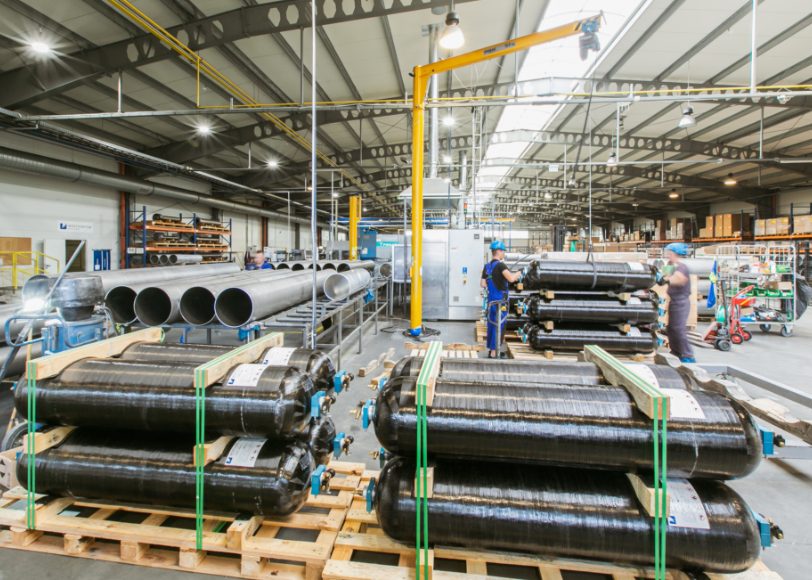
A guide for operations managers evaluating cylinder asset tracking in manufacturing environments
Overview
Every year, manufacturers and distributors lose a significant percentage of their cylinder fleet to unreported loss, customer-site misplacement, and transit shrinkage, and most do not know the size of the gap until they conduct a physical audit. A wrong platform decision compounds that problem for years. This guide covers the five considerations that actually determine whether a cylinder tracking program works long term: identifier technology (RFID, QR code, or barcode), ERP and billing system integration, regulatory auditability under FDA 21 CFR Part 11, DOT, and ISO 9001, real-time inventory visibility, and scalability across sites and asset types. If you manage industrial gases, medical oxygen, LPG, or specialty chemicals and you are currently evaluating RTI tracking platforms, this is where to start. ACSIS, part of Antares Vision Group, builds Returnable Asset Management programs for exactly this environment.
You already know what a missing cylinder audit feels like. You know what it means to sit in a compliance review with incomplete records and try to reconstruct a chain of custody from three different systems. The tracking decision you made early in your program either set you up or cost you, and you probably did not know which until it was too late to change course without a significant rebuild.
Cylinders are not a simple inventory. Each one represents real capital, real regulatory obligation, and real risk if it goes missing, falls out of inspection, or disappears into a customer site and never comes back. The pressure to get this right has never been higher and the technology options have never been more confusing to sort through.
Consideration 1: Identifier Technology — RFID, QR Code, or Barcode?
The identifier you put on your cylinders is the foundation of everything else. Barcodes are where most operations start, and for good reason. They are economical, universally supported, and your existing warehouse infrastructure almost certainly already handles them. The limitations are real, though. Line-of-sight scanning is non-negotiable, and in industrial environments where cylinders are exposed to heat, pressure, and chemical contact, label degradation is a genuine operational problem, not a theoretical one.
QR codes give you more to work with. The data payload is denser, and you can encode asset history, inspection records, or chain-of-custody links directly into the tag. Delivery and pickup crews can capture cylinder status at the point of exchange on a mobile device without dedicated hardware. That matters when you are trying to get scan compliance from people whose primary job is not data entry.
RFID, specifically passive UHF, is the right answer for high-volume, high-speed environments. Read ranges of several meters, scanning dozens of cylinders simultaneously without line of sight, automated dock door reads, and truck-loading verification. These are things barcodes and QR codes simply cannot do at a manufacturing scale. The upfront investment is higher but the throughput and accuracy gains are significant. Industry estimates put pallet and packaging losses at $750 million a year across US industries, and cylinder fleets that rely on manual or barcode-only tracking face the same underlying problem: no automated accountability means losses accumulate before anyone catches them.
The good news is you do not have to pick one and lock yourself in. ACSIS supports all three identifier technologies within the same Returnable Asset Management platform, which means you can start where your budget and infrastructure are today and phase in RFID over time without tearing out what already works.
Consideration 2: Integration with ERP and Billing Systems
A cylinder tracking system that lives in its own silo is not a solution. It is a second system to manage on top of the problem you were already trying to solve. Operations managers who have been through a poorly integrated deployment know what that looks like in practice. Rental billing cycles that cannot close because scan data never reached the ERP. Finance is chasing ops for a spreadsheet update at the month-end. Inventory reconciliation takes two days because nothing talks to anything else. Those are not edge cases. They are what happens when integration is treated as a post-deployment problem instead of a selection criterion.
Before you select a vendor, map your actual integration requirements. The questions worth asking:
- Does the platform have pre-built connectors for SAP, Oracle, Microsoft Dynamics, or whatever ERP your organization runs?
- Can a scan event at the point of delivery automatically trigger a rental billing cycle, or does someone still have to go make that happen manually?
- Does the solution support API-level integration for custom manufacturing execution systems?
- What happens when a field scan occurs in a low-connectivity environment, and how does data reconcile when the connection comes back?
ACSIS brings decades of manufacturing integration experience to every Returnable Asset Management deployment. The platform connects directly to your ERP, billing system, and inventory infrastructure through pre-built and API-level integrations, which means scan events flow into your existing workflows automatically rather than creating a parallel process your team has to maintain.
Consideration 3: Compliance and Regulatory Auditability
For operations managers in regulated environments, such as medical oxygen, industrial compressed gases, and hazardous materials, compliance is not a feature you evaluate. It is a baseline requirement. Depending on your sector, that could mean:
- FDA 21 CFR Part 11 requirements for electronic records in medical gas environments
- DOT and OSHA documentation covering cylinder inspection intervals and hydrostatic testing dates
- ISO 9001 asset management record requirements for your quality management system
- Customer contractual obligations for serialized chain-of-custody documentation going back years
Under 21 CFR Part 11, audit trails must be secure, computer-generated, time-stamped, and capture who did what and when. They must preserve previous entries and be available for review and copying at any point during an inspection. That means your cylinder tracking platform cannot treat compliance logging as an afterthought. Every scan event needs to be attributed to a specific user and stored in a way that survives an auditor’s scrutiny without your team spending three days pulling records from multiple systems first. MasterControl
Antares Vision Group’s background in pharmaceutical serialization and track-and-trace compliance is built directly into how ACSIS approaches regulated cylinder environments, designed to meet these requirements from the ground up.
Consideration 4: Real-Time Inventory Visibility and Loss Prevention
The gap between what your system says you have and what you can actually find in a physical audit is rarely a rounding error. It is capital replacement cost, reduced fill capacity, and, in some cases, a compliance exposure if the missing assets have active inspection requirements. It builds quietly, a few cylinders at a customer site, a return that never got processed, until the number becomes hard to recover from.
Effective cylinder asset tracking gives you three things that manual inventory processes cannot:
- Location awareness in real time. Not “we think it’s probably at this customer site.” Actual visibility into whether a cylinder is at your fill plant, in transit, at a customer location, or flagged as overdue for return.
- Dwell-time analytics that surface exceptions automatically. When a cylinder has been sitting at a customer location past the contracted return window, automated alerts push those exceptions to the people who can act on them before they age into permanent losses.
- Audit automation that does not require a full team shutdown. Scheduled and on-demand cycle counts using RFID or mobile QR scanning verify physical inventory against system records in a fraction of the time manual counts take.
ACSIS’s Returnable Asset Management platform gives operations managers all three. The reduction in cylinder loss rates that teams see in the first year is not subtle, and it is not because the technology is magic. It is because visibility creates accountability that did not exist before.
Consideration 5: Scalability Across Sites, Customers, and Asset Types
A solution that works for one facility and 5,000 cylinders needs to hold up when you are running three facilities, managing multiple cylinder types with different inspection cycles, and tracking 50,000 assets across a distributed customer base. Scalability is not a technology question. It is an architecture question, and it is one worth asking before you are locked into a platform that cannot grow the way your operation does.
As you evaluate platforms, push vendors on how they handle:
- Multi-site operations with centralized reporting alongside site-level visibility, not one or the other
- Multiple cylinder classes, where high-pressure, cryogenic, acetylene, and propane assets each carry different handling requirements and inspection schedules
- Customer portal access that lets large accounts self-serve on their cylinder inventory and rental status without calling your team
- Mobile scanning that works consistently across warehouse, dock, and field environments on a single unified platform
- Data volume growth, what happens to reporting performance and scan processing speed when you double the asset count?
ACSIS has deployed Returnable Asset Management programs for customers managing assets across complex, distributed manufacturing networks. The architecture scales horizontally, which means adding sites, asset classes, and users does not require rebuilding the system or running parallel platforms while you transition.
The most expensive tracking system you will ever operate is one you outgrow in two years.
The five considerations above will not decide for you. But they will tell you quickly whether a vendor has actually built for your environment or is selling you a general-purpose platform and hoping it fits. Operations managers who go through this evaluation before committing to a platform consistently end up with programs that hold up under audit, scale without a rebuild, and recover fleet losses that manual processes never would have surfaced. That is the outcome worth building toward.
Ready to Build a Cylinder Tracking Program That Actually Works for Your Operation?
ACSIS, part of Antares Vision Group, works directly with operations managers in manufacturing to design and deploy Returnable Asset Management programs built around your environment, your regulatory requirements, and your growth plans.
Whether you are starting with a QR-code-based field scanning program or building out a multi-site RFID deployment from scratch, our team will help you define the right architecture before you commit to a platform.
Contact us today to schedule a consultation with one of our Returnable Asset Management specialists. Bring your current fleet size, your compliance obligations, and your biggest tracking headaches. That is exactly the conversation we are built for.