
AI Needs Ground Truth: What Supply Chain AI Can't See Without Physical Event Data
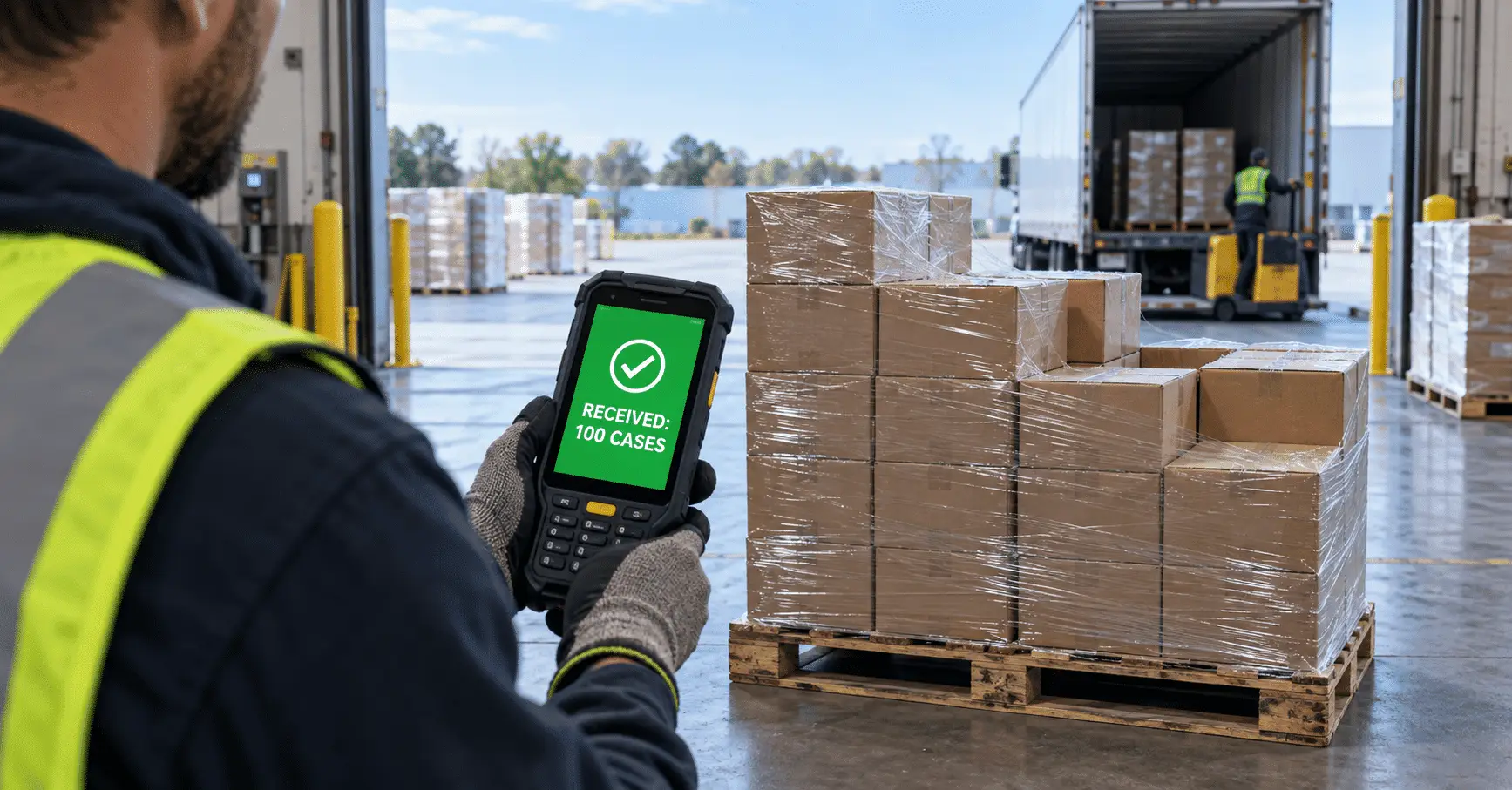
When a planner sees incomplete data, they question it. They call the warehouse, ask the supplier, or walk the factory floor. People have been filling in missing operational data this way for decades.
An autonomous system can only question what it can see. When the data is incomplete, it acts on what it has.
That difference is what supply chain leaders need to address as they hand more forecasting, replenishment, and routing decisions to AI. The less people are involved in a decision, the more certain the machine needs to be about what is happening in the physical world. AI models, agents, and enterprise applications all keep getting better at deciding. None of them can act on a physical event that never became data.
AI needs ground truth. ACSIS captures it.
Enterprise systems only know what is reported to them
SAP and other enterprise resource planning (ERP) platforms, warehouse management systems (WMS), manufacturing execution systems (MES), and transportation management systems (TMS) are essential. They hold the orders, inventory, plans, receipts, shipments, and work orders that run the business. But they only know what gets reported to them.
The physical world doesn’t wait for a transaction. Products, assets, and materials move continuously. Conditions change between postings. People, equipment and partners carry out processes, and many events happen outside the boundaries of any system of record. A short receipt gets logged as complete at the end of a shift. A returnable container leaves with a customer and never comes back. Neither one exists for the ERP until someone reports it. Take the short receipt: the system records 100 cases when only 80 arrived, so the replenishment model sees enough stock, holds the reorder, and the shelf runs empty before anyone notices.
The distance between what happens in physical operations and what the enterprise knows is the information gap. The ERP, the sensors, and the AI can each be correct about what they see. The gap sits between them, and if AI can’t see those events, it has to infer them. Inventory data has the same problem. ECR Retail Loss research from December 2025 found that more than 60% of retail inventory records are inaccurate. That’s the data many AI planning tools start from.
(We looked at this from the logistics side in Where’s Your Stuff? Why Your ERP Goes Blind the Moment Product Leaves the Dock.)
Seven questions your systems can’t answer between transactions
To size the gap, pick one product, pallet, or container and ask what your systems can tell you about it right now, without anyone picking up a phone:
- Location: Where is it right now?
- Event: What actually happened to it?
- Condition: What condition is it in?
- Dwell: How long has it been there?
- Custody: Who has it?
- Execution: Was the planned process followed?
- Blind spot: What happened between the last two events?
If the answers come from spreadsheets, emails and calls, you are looking at the gap. When it persists, it compounds: blind spots cause delays, delays cause errors, and errors turn into excess inventory, loss, risk, and slower decisions.
The gap hasn’t changed. Its consequences have.
Companies have lived with this gap for as long as they’ve had ERP systems. When people made the decisions, missing physical data meant inefficiency: extra calls, extra safety stock, slower answers.
With AI in the loop, the same gap means models working from an incomplete picture. And as companies give agents more room to act, it can mean autonomous action based on that incomplete picture. In PwC’s 2026 Digital Trends in Operations Survey of 767 US operations and supply chain leaders, 37% said they are already comfortable assigning AI agents to run full end-to-end operational processes.
The timing comes from your own AI roadmap. Each process you hand to an agent is one more place where the gap decides the outcome.
Three questions to answer before AI can answer the fourth
The question every AI investment is meant to answer is “What should we do next?” It can only be answered reliably once three earlier questions are:
- What happened? The physical event, captured as it happened.
- What does it mean? That event connected to the right order, lot, material, asset, location, partner and process.
- Is it what should have happened? Actual execution checked against the plan.
That is what ground truth means in a supply chain: time-stamped evidence of physical events, tied to the business objects they affect and validated against the plan. It is also what makes an AI recommendation explainable, because operations teams can trace it back to the events behind it.
Where ACSIS fits
An autonomous supply chain has to do five things on its own: sense, understand, decide, act, and adapt. AI provides the intelligence to decide. Autonomous systems provide the action. ACSIS, part of Antares Vision Group, provides the reality they depend on at the start of the chain: sensing what happened and understanding what it means for the business. ACSIS works in three steps:
- Capture. ACSIS collects physical events where they happen, from barcodes, RFID, IoT and sensors, mobile and edge devices, and partner data. This is the event as it happened.
- Contextualize. Each event gets its business context: what happened, to what, where, when, and how, and why it matters. It is then validated against the plan. This is the event with meaning. (More in Why RFID Reads Need Business Context to Improve Supply Chain Visibility.)
- Connect. That context reaches SAP and other enterprise systems in real time, without manual entry, and is delivered to WMS, MES, TMS, and data and AI platforms. This is the event where decisions are made. (See How SAP Systems Integrate with Supply Chain Visibility.)
Existing systems of record stay in place. ACSIS adds the layer that tells them what really happened.
Every ACSIS solution closes a different part of the gap
The same architecture runs underneath every ACSIS solution. What changes is which questions it answers.
| Solution | The questions it answers |
| Returnable Assets | Where is it? Who has it? How long has it been there? Is it available? |
| Warehouse & Manufacturing | What moved? What was consumed? What was received or shipped? Is inventory accurate? |
| Traceability | What happened to this product? Which lot or serial? Where did it move? Can we prove chain of custody? |
| Cold Chain & Conditions | What temperature, for how long? Where did exposure occur? Was there an exception? |
ACSIS was solving this data problem before autonomy became the goal. Companies including DuPont, Kuraray, Bimbo, and Hershey use ACSIS today. ACSIS delivers that ground truth now, and that knowledge is worth more as more decisions become autonomous.
Autonomy starts with knowing
The question for supply chain leaders is whether their AI can see reality well enough to act on it. More autonomy leaves less room for assumption. The first investment is the physical data foundation underneath the model: capturing what happened, connecting it to the business, and validating it against the plan.
AI can predict what happens next. ACSIS makes sure it knows what happened first.
You can’t automate what you don’t know. Talk with ACSIS about where the information gap sits in your operations.